Technology. We all both love it and hate it. It makes our lives far easier, but also far more frustrating. But which of these infuriating and useful technologies are truly the greatest? I will not bore you with tales of the automobile, computers, the printing press and the like. We can all agree that such inventions were highly influential and have both positively and negatively influenced our lives. Instead I will regale you with some lesser inventions that most people do not stop to think about quite as much. Although these technologies are not as widely influential as say, the wheel, they are still worthy of recognition.
1.) Pliers

If you are to take one thing away from this, let it be pliers. These versatile tools are used by everyone from electricians to mechanics, and probably your neighbor across the street. The main job of pliers is gripping things that are too small, or need to be held with more force than just fingers would allow. There are many kinds of pliers, from needle-nosed for grabbing small wires, vice grips for holding anything really tightly, tongue pliers for holding many different sized things, and combo pliers that will do a little bit of everything. If you can think of a job, there is a type of plier to help it get done more effectively. In fact, pliers are so useful that I would go so far as to say that every home should have a pair. Whether it be just for simple tasks like clearing a jammed stapler or removing a broken prong from an outlet (yes, it's happened!). Pliers make those annoying little tasks far easier.
2.) Aluminum tape

If you have ever had something break that needed to be held together, but duct tape simply didn't cut the butter, this might be what you needed. Most tapes are made with a stip of carrier and adhesive. In masking tape, the carrier is basically paper, and is not very strong. In duct tape the carrier is a sor of fabric of nylon and fiberglass strands, giving it extreme tensile strength. Duct tape is so strong in fact, that, if folded over to be 5 layers thick, can be used to tow a car. But duct tape is not without drawbacks. For one, it is hard to tear, the adhesive is very gooey, and it is very flexible. There are cases where these drawbacks are actually strengths, but in most day-to-day cases, they will just be inconvenient. This is where aluminum (or HVAC) tape comes in. Instead of paper or woven plastic, it uses metal. Using thick aluminum foil as a carrier has many advantages, the most obvious being that it holds its shape. Although it tears very easily, when doubled over it is much harder to tear and is remarkably strong. The adhesive has a lower max adhesion, but it holds on harder up to that point than duct tape. Aluminum tape is also what you are actually supposed to use on ducts - not duct tape! On top of all this, it is shiny, the back is electrically conductive, is watertight, can withstand extremely high temperatures, and is recyclable. My father covered some holes on the bottom of our car with aluminum tape a year and a half ago, and it is still going strong. In conclusion, with aluminum tape you get the best of both adhesive tape, and aluminum foil. If there is ever two things that need to be held together, and duct tape doesn't cut the butter, try aluminum tape. It just might change your life. (it also might not)
3.) Heat Pumps
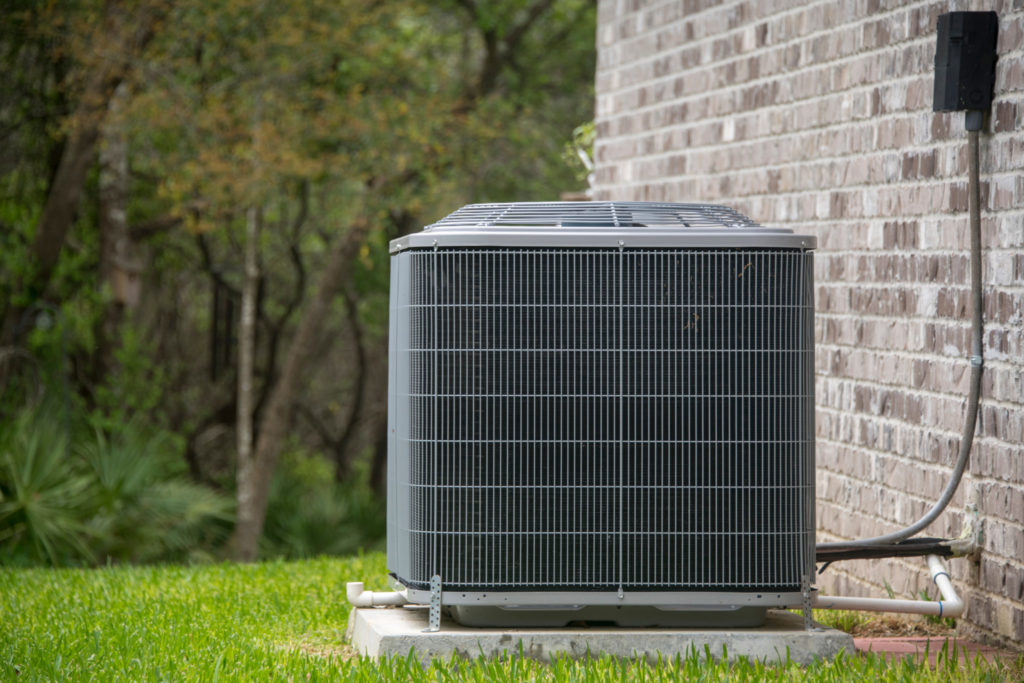
Although as living organisms, we all exhibit homeostasis, there are limits to its effectiveness. There will always be a temperature at which your body will stop operating normally, and begin to fight the the environment to maintain a stable core temperature. Coats were invented to extend that operable range downward, and allowed humans to thrive in much colder temperatures, but what about the other direction? Throughout history people have invented many ways to keep cool during the summer heat. At the simplest, people again adapted their clothing, the Bedouins wearing thin, baggy clothing with many layers to facilitate airflow. Others took a more sophisticated approach. Ancient Persia for example, contained vast amounts of desert. These deserts are cold in the winter and scorching hot in the summer. As such, a method of keeping cool in those hot summer months was needed. This led to the invention of the wind catcher. Wind catchers redirected cooler air from above a building into the building, pushing the hot air out. This method of cooling took no external energy source and was remarkably effective, however it only cools a building to the ambient temperature a hundred or so feet off the ground.
If you want to cool a room to below the ambient temperature, things get more complicated. Of course, the ancient persians also invented yahkchāls, which were cone shaped freezers. They were very effective, and could store ice in the summer, but as they are often extremely large, they are not well suited as air conditioners. So, two thousand years later, the air conditioner was invented. Traditional air conditioners have a loop filled with refrigerant which then gets compressed and pumped through a radiator. The refrigerant equalizes temperature with the ambient, but when it is decompressed in the part of the AC that is inside the room, it cools down, cooling the air with it. When it goes back outside, it dumps the heat from the inside air to the outside, cooling the room. Heat pumps on the other hand, move heat from inside to outside with an (even more) complicated loop. Heat pumps are much more energy efficient, and have the massive advantage of being able to cool as well as to heat. Since they cover both heating and cooling and are muc h more energy efficient, heat pumps are slowly gaining popularity for their lower relative costs and eco-friendlyness. Oh, and you will need some pliers and aluminum tape to install it!
Comments
Post a Comment