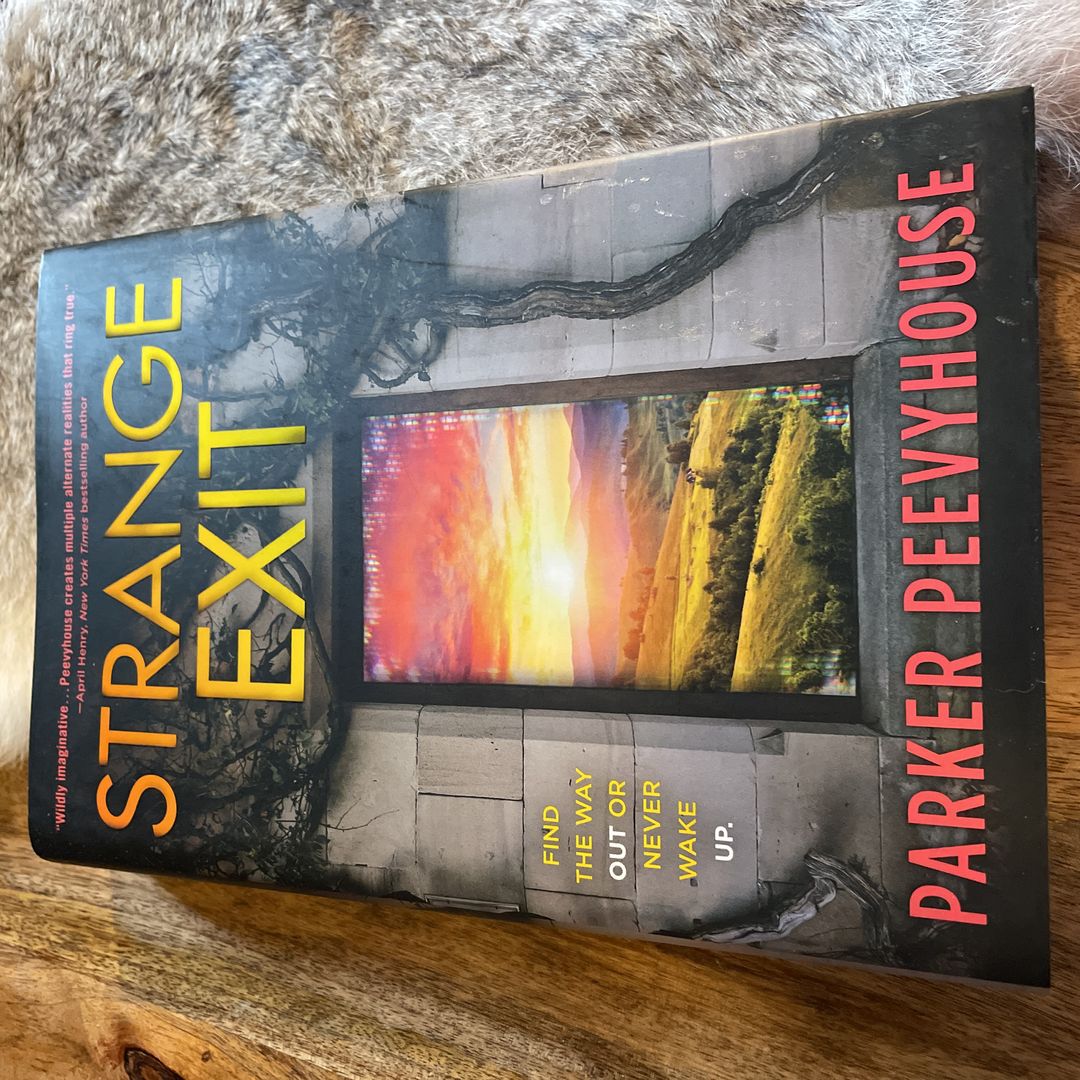
Imagine a world in which that world as we no it no longer exists, ravaged and destroyed by nuclear war. This being so, the only survivors are a group of teenagers, randomly selected by the wealthiest man on Earth, who left in a spaceship at the onset of the war. The ship, built by the creator of the popular virtual reality system Paracosm, was originally meant for exploration. Before it was launched, the ship was equipped with a powerful virtual reality system called the Sim for the passengers to live in while the Earth’s condition was stablizing. The ship was supposed to eject the passengers from the sim once this happened, but something in the Sim was draining the ship’s power, as it takes massive amounts of computing, so many of the ship’s functions begin to fail. Like in The Matrix, the passengers cannot leave, as they begin to forget that they are in a simulation, and so don’t know that they even should leave.
The story follows 17-year-old Lake, who spends her time searching the Sim for sleepers, passengers who forgot that they are in a simulation, in order to wake them up. The passengers that have exited statis believe that the ship will only let them back to Earth once every passenger has been woken up, but they strictly prohibit each other from reentering the Sim in order to make sure that they won’t forget and be lost once more. Of course, this makes it far less likely that the rest will wake up before the ship completely falls apart. This means that Lake’s missionary trips are done in secret.
Things change with the introduction of Taren, a boy who decides that he wants to help Lake try to free the rest of the sleepers. As Lake teaches Taren how to convince people to exit the Sim, we learn that the sleepers memories fade quickly; even quickly enough that Lake an Terren must have something to remind them that they are in a simulation; that none of it’s real. For Lake, that something is a figment, a Sim NPC, of her sister Willow. Since she knows Willow is not actually on the ship, whenever she sees Willow she knows she has to be in the Sim. Taren said his memories, his real memories, were “like when you have different dreams, one after another. But when you wake up, you only really remember the last one” (Peevyhouse 109). Since the sleepers really only remember well things that happened fairly recently, if they want to clear out the Sim, Lake and Taren have to restore enough of the sleepers’ memories for them to realize that they are still in the Sim, and they need to get out.
Of course, you can’t just walk up to someone, tell them that everything they think they know about their existence is tragically wrong and expect them to believe you. Hence Lake tries to gradually get them to come to the logical conclusion that something is up, and thus start to regain their memories of the past. But, since Taren didn’t know that, he walked straight up to someone and rocked their world. They knew something didn’t add up, but they didn’t quite realize why. This discrepancy caused a glitch in the Sim that came in the form of tar oozing through the floor, which “appears whenever there’s and incongruity...Like when someone believes they’re both at a party and not at a party” (Peevyhouse 70). This tar is extremely important as it symbolizes the allegory and conflict of the story. It is the pseudo-physical manifestation of the sleepers wish to better their understanding of their world, and whether their world really is the world they think it is. When a sleeper touches the tar, they vanish and, nobody really knows how or why, but sometimes they wake up on the ship, but often they don’t. The fact that they simply evanesce, and nobody really knows what happens to them adds another layer of mysticism and intrigue, and perhaps adds to the tar an even deeper meaning to its existence that already contains a greater message.
Previously, when contemplating whether or not we live in a simulation or such other lower existences, I would use the excuse that “well, even if we are in a simulation, if life is good enough, does it really matter?”. After reading this book, I have realized a flaw in this argument. Perhaps life is good, but what if for that supposedly good life to continue, there are processes in the “real world” that must continue, but for those to continue you must realize your differing existence and enter the real world. In this book, that being for the Sim to continue, you must exit it to reduce the load on the ship, but in doing so, you make it you can never go back; your life will never be the same. Another flaw in this argument is that although your simulated life might be good, that is all you have known; the non-simulated life could be far worse, but this higher existence also bears the potential to be far preferable to your current one.
Even so, there is an aspect to existence we can all relate to, even if we don’t have a degree in philosophy. Eventually, we all shall senesce; perish and be lost with time. Like touching the tar, when you die what makes you you, your life, your existence, your soul, vanishes, and, although some may have theories, no one really knows what happens then. Religion even, is us trying to figure out what happens after we die, and how to make the best of what time we have before thet inevitable eventuality. Perhaps death, like tar, is waking from our simulation of life to be brought back to the ship. Despite this, all that we truly know was summed up finely by the creator of Paracosm, saying that “Death will be the strangest exit yet” (Peevyhouse 216).
In conclusion, Strange Exit by Parker Peevyhouse, if you take the time to contemplate its pages, gives rise to questions of that which makes us truly who we are, of existence, and the meaning of life.
P.S. Yeah, you should read it if you are bored, but it’s not quite life-changing. If you do read it though, go back and think about it, look through it again, and you will see things that you missed; details that didn’t seem important when they were given will make sense, and you will realize that it was actually pretty well written. That’s my opinion.
Works Cited
Peevyhouse, Parker. Strange Exit. Tor Teen, 2020.
This was a great post and although I was really confused what your point was in the beginning, your last paragraphs really induced deep-thought about the whole "everything is a simulation" theory. I also really like your title as it is really funny yet intriguing
ReplyDelete